
Traditional breakfast dishes around the world can be a real adventure for your taste buds. Each region has its own rituals and recipes that make mornings unique. I’ve always found that stumbling upon what people eat for breakfast gives you this little window into their daily life and culture. In this article, I’m sharing some popular and lesser known breakfast classics from different continents, plus some insights on what makes them so special and how you might try them in your own kitchen.
Why Breakfast Looks So Different Around the Globe
Breakfast isn’t just about filling up before the day. The food on the morning table is shaped by everything from climate and local crops to religious customs and family traditions. For example, I’ve noticed that countries with cold winters tend to favor heartier breakfasts with hot stews or porridge, while tropical places often go for fresh fruits, rice, and light sides. It’s all about what keeps people fueled for what they need to do all day.
Travelers sometimes get surprised by what counts as a classic breakfast. In Japan, fish and pickles might be the norm; in France, a light pastry and coffee hits the spot. Understanding these differences makes hotel buffets or home stays a lot more interesting, and you might stumble on something new that ends up as your comfort food.
Popular Classic Breakfasts Everyone Should Try
Many classic breakfast dishes have been perfected over generations. Here are some iconic morning options from different corners of the globe that I think are totally worth a try at least once.
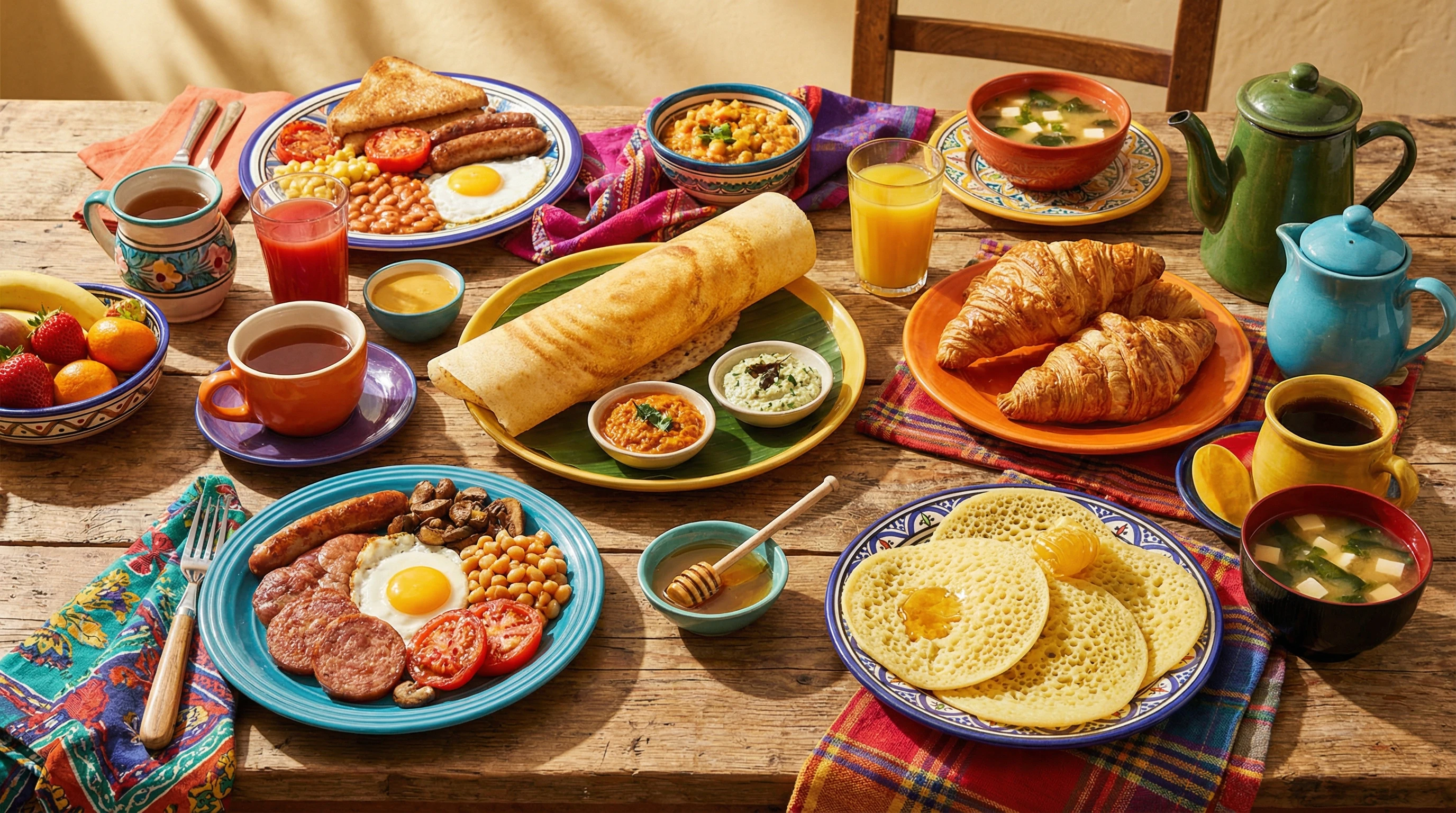
- Full English Breakfast (United Kingdom): This is a serious plate loaded with eggs, sausage, bacon, baked beans, grilled tomatoes, mushrooms, and toast. Some people add black pudding or hash browns. It’s basically a feast, and it keeps you going for hours.
- Chilaquiles (Mexico): Crispy tortilla chips simmered in red or green salsa, topped with a fried egg, cheese, crema, and sometimes shredded chicken. It’s crunchy, saucy, and a little spicy, perfect if you’re someone who wakes up hungry.
- Congee (China): A rice porridge that’s comforting and surprisingly flexible. Toppings vary by region but can include pickled vegetables, pork floss, fried shallots, or salted duck egg. I love how homey congee tastes, especially on cool mornings.
- Croissant and Café au Lait (France): French breakfasts are famously simple. A fresh croissant (or maybe a pain au chocolat), dipped in milky coffee is all about good quality and not overdoing it.
- Dosa with Sambar and Chutney (South India): Thin, crispy fermented rice pancakes served with a spicy veggie stew (sambar) and coconut or tomato chutney. It’s light but satisfying, and the flavors pack a punch.
- Baghrir (Morocco): These are soft, spongy pancakes filled with holes for soaking up honey and butter. Served with mint tea, it’s a sweet start to the day that’s not too heavy.
Getting Started with Trying World Breakfasts at Home
You don’t need to travel far to enjoy traditional breakfasts from other places. Many core ingredients are available at local stores or online. If you’re curious about exploring, here are some pointers and tips I’ve found handy:
- Pick one new recipe each week: It keeps things fun and stops you from getting overwhelmed by new techniques or ingredients.
- Start with familiar bases: Lots of global breakfasts use bread, rice, or eggs, but with a twist. For instance, try making Japanese tamago sando (egg salad sandwich) instead of your usual eggs on toast.
- Look up short recipe videos: Seeing the process helps, especially if the dish uses different cooking utensils or methods, like a clay pot for Turkish menemen or a bamboo steamer for steamed buns.
Enjoying an international breakfast at home is a great way to introduce friends and family to new flavors and start the day with a little adventure.
Things You Might Notice When Exploring Global Breakfasts
Switching up your breakfast routine brings new flavors, but there are a few things to keep in mind while experimenting:
- Portion Sizes: Some countries go all in at breakfast with big plates (like the US or UK), while others keep it light and quick. Adjust servings to suit your own appetite and schedule.
- Preparation Time: Dishes like Japanese miso soup or Turkish börek might need a little more prep than your usual toast. Weekend mornings are perfect for trying these out.
- Spices and Sauces: Many traditional breakfasts are big on flavor. If you’re not used to chili, curry, or lots of herbs first thing, you can always dial it back a bit on your first go.
- Eating Hot vs. Cold: Some cultures serve breakfast hot (like Ethiopian fir fir or Egyptian ful medames), while others go for cold and refreshing (think German müsli with fruit and yogurt).
Getting Ingredients
If you’re having trouble sourcing rare ingredients, international grocery stores are a great place to explore. I often find that staff at these shops love sharing tips about what to try and how to use unfamiliar items. They may even share family recipes or suggest substitutes if an ingredient is hard to find.
Sticking to the Recipe or Not
It’s fun to start with traditional recipes, but it’s totally normal to adjust for allergies, dietary preferences, or whatever’s in the cupboard. The most important part is enjoying the process and learning something new. Sometimes, mixing local ingredients with international styles creates a delicious fusion unique to your home.
Serving and Sharing
Inviting friends or family for a themed breakfast spread is a cool way to try several small portions. Think of a “world breakfast sampler”: a scoop of Japanese rice, a mini French pastry, and a shot of spicy chai on the same table. Smaller, shared plates make things casual and conversation friendly. It’s also a conversation starter and a way to connect over new flavors, comparing notes on what everyone likes most.
Cultural Insights: Breakfast Rituals from Different Places
Each breakfast is more than just a dish, it’s a routine shaped by local life. I’ve picked out a few interesting traditions that show how breakfast functions as a social or even spiritual daily event.
- Japan: Traditional ichiju sansai (one soup, three sides) breakfast is beautifully balanced and eaten slowly, focusing on harmony of flavors and nutrition. The idea is to start the day with balance, not just in nutrition but also in experience, matching the calm and mindful mood of the morning.
- Turkey: A Turkish breakfast table (kahvaltı) is full of variety: piles of breads, olives, cheeses, honey, tomatoes, cucumbers, and sometimes an egg dish like menemen. It’s a meal built for sharing with family and friends; taking time to enjoy breakfast together is a valued tradition, especially on weekends.
- Brazil: In many spots, paodequeijo (cheese bread) and strong coffee offer a practical start for busy mornings. Cafes serving fresh paodequeijo are gathering points for quick chats before work or school.
- Iran: Barbari bread with feta, walnuts, jam, and sweet black tea is commonly enjoyed with neighbors or family, making breakfast a social pause before the day gets busy. Sometimes, this morning ritual stretches well into the morning, especially on holidays.
Frequently Asked Questions
Here are some common questions I get about traditional breakfasts from around the world:
Question: Is breakfast always the main meal in other countries?
Answer: Not really. In some places, breakfast is the biggest meal (think of a full Irish or Colombian desayuno), while in others it’s the lightest and quickest. Dinner is often the main event in countries like Spain or Argentina.
Question: Are traditional breakfasts sweet or savory?
Answer: Most cultures favor savory breakfasts, but sweet elements like jam, honey, or pastries often show up. Continental Europe tends more toward fresh breads and baked goods, while Asia and Africa often lean savory and spiced.
Question: What’s the easiest world breakfast for beginners?
Answer: Shakshuka from North Africa (eggs poached in tomato sauce) or congee can be pretty easy and forgiving, with ingredients you’ll find at most supermarkets. These dishes don’t require fancy equipment and can be adjusted for spiciness or dietary needs with simple swaps.
Question: Do people really eat soup for breakfast?
Answer: All the time! Soups like Vietnamese pho, Thai jok, or Eastern European borscht are popular breakfasts, especially in colder months. These hot, comforting dishes warm you up and set a cozy tone for the day.
Trying Your Own Global Breakfast Adventure
Exploring breakfast traditions from around the world is a way to add flavor and variety to your routine. Even if you just swap out plain toast for a bit of Spanish tortilla or Turkish simit, you’ll stumble upon whole new ways to start your day. If you’re ever bored of your usual cereal bowl, taking inspiration from other countries’ breakfast tables can turn even an ordinary morning into something special. Don’t be afraid to experiment! Who knows — you might track down your new favorite comfort food hidden in a global tradition. Wrapping up, starting your day with international flavors is not only tasty but also connects you to cultures and stories far from home.