If you love breakfast foods and want to dig deeper into what makes classic American breakfasts stand out, you’re in the right place. From sizzling bacon to stacks of pancakes, American breakfasts have a ton of variety, comfort, and heartiness. I’ll break down all the basics, explore regional specialties, and share practical tips to help you bring some breakfast magic to your own kitchen.
Understanding American Breakfast Traditions
The American breakfast has some pretty interesting roots. Early settlers often ate whatever was handy, but by the late 1800s, breakfast became a way to start the day strong with fuel for work. Over time, different regions and communities added unique foods; think grits in the South or bagels in New York—that shaped the wide range of breakfast options you’ll see today.
Whenever I travel, I make a point of exploring local breakfast spots. In my experience, most diners and cafés stick to the basics: eggs, bacon or sausage, toast, potatoes, and coffee. But depending on where you are, you’ll find some cool regional twists. Knowing these origins helps you appreciate not just the flavors, but also the history behind each meal.
Classic Breakfast Staples You’ll Always Find
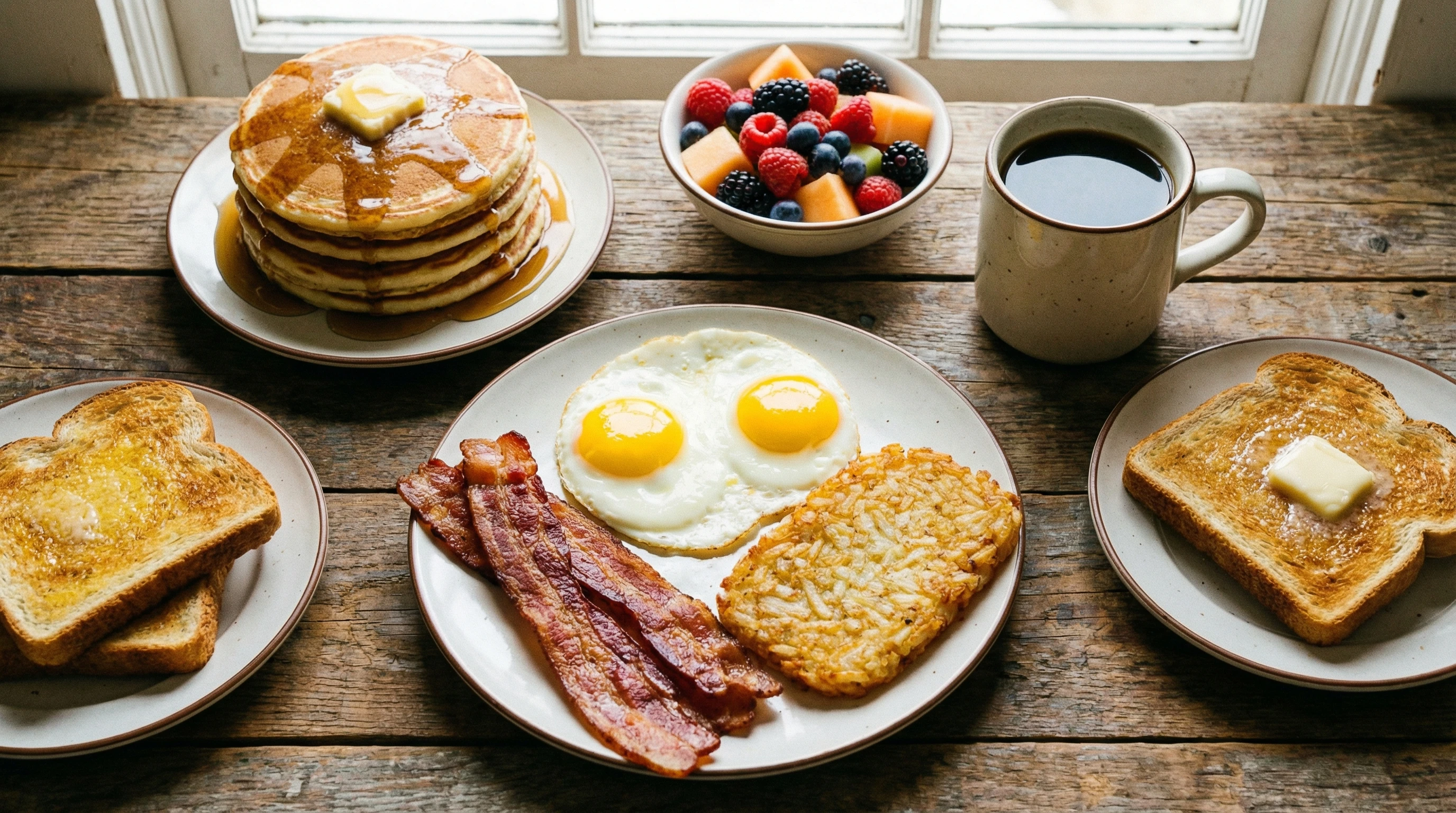
Whether you’re hitting a diner or cooking at home, certain foods just scream “American breakfast.” Eggs are everywhere, usually scrambled, fried, or poached. Bacon, sausage links, or ham are typically right alongside them. You’ll often see toast or English muffins buttered up and ready to go, plus some kind of potato—often hash browns or home fries.
- Eggs: Scrambled, sunny side up, over easy, poached, and more. Eggs add protein and can be dressed up or down.
- Bacon and Sausage: These add a salty, savory kick that pairs nicely with just about everything else.
- Pancakes, Waffles, and French Toast: For those with a sweet tooth, these griddled treats show up on nearly every menu. Don’t forget the maple syrup.
- Hash browns or Home fries: Whether grated and crisped up or chunked and fried, potatoes are a must-have side.
- Coffee and Juice: Most people kick off their morning with a cup of coffee and a glass of orange juice.
This lineup gives you a little bit of everything: protein, carbs, and a mix of savory and sweet flavor options. It’s breakfast comfort on a plate.
Regional Breakfast Favorites Across the US
There’s no single “right” way to do an American breakfast. The country is so big that every region has some local favorites worth checking out. Here are a few that stand out to me:
- Southern Breakfast: Biscuits and gravy, grits, eggs, and country ham. There’s nothing quite like a buttery Southern biscuit topped with sausage gravy.
- New York Style: Bagels with lox and cream cheese are the go-to. Add capers, tomato, and onion for the full experience.
- West Coast: Healthier options like avocado toast, fruit bowls, and granola are more common here. You’ll also find breakfast burritos packed with eggs, cheese, and salsa.
- Midwestern: Casserole dishes, sometimes called breakfast bakes or stratas, are really popular, especially on weekends.
Even if you can’t travel, trying these dishes at home is a great way to sample classic American goodness from all over the map. Regional twists not only change the flavors, but also reveal how local cultures shape the way breakfast is enjoyed. For instance, the Midwest’s hearty breakfast bakes were born out of a need to feed large families, while California’s lighter fare taps into health conscious food trends.
Cooking a Classic American Breakfast at Home
I’ve found that bringing the diner experience home just takes a few steps and some smart planning. Start simple and add more if you have time or feel like experimenting. Here’s a typical game plan:
- Prep the Ingredients: Get your eggs, bacon or sausage, some potatoes, bread, and any toppings or extras lined up before you start cooking. It helps to chop veggies, slice fruit, and have butter or spreads ready.
- Start with the Meat: Bacon or sausage takes time to crisp up, so get it going while you handle other things. Cooking meat first also gives you flavorful drippings to use for your potatoes or eggs.
- Potatoes Next: If you’re doing hash browns or home fries, fry these up in some of the bacon fat for awesome flavor. Let them crisp up undisturbed on one side before flipping.
- Eggs Last: Cook eggs how you like just before serving so they’re fresh and hot. Scrambled, sunny side up, or over-easy—choose what you love.
- Bread and Extras: Toast bread, warm up pancakes, or finish off waffles at the end. It’s easy to set these out on a platter with jams, nut butters, and even some sliced fruit.
Presentation is easy; just serve everything up family style, and let everyone dig in. I usually put a jar of jam or some fresh fruit on the table to add a little color and freshness. Family breakfasts can create a relaxed, cheerful atmosphere, making mornings more enjoyable for everyone.
Tips for Mixing Things Up
While the classics are hard to top, I like switching things up for variety. Swapping in turkey bacon, using wholegrain bread, or adding veggies to eggs can keep things interesting (and sometimes a little healthier). Breakfast sandwiches or breakfast tacos are super handy if you’re short on time or eating on the go.
For sweet options, adding berries or bananas to pancakes and waffles brings a fresh twist. Nut butters, flavored syrups, or specialty jams can really take up simple toast or French toast without a lot of effort. If you’re hosting brunch or want to impress guests, try mini pancake stacks with layers of fruit, or make a DIY breakfast bar with different spreads, fruits, and fix ins for people to create their own combos.
Another tip I swear by is using leftover roasted veggies in omelets or frittatas. It helps cut down on food waste and packs in extra flavor. And if you have day-old bread, turn it into French toast for a quick and tasty dish.
Common Questions About American Breakfasts
Lots of folks have questions about traditional breakfasts, especially if they didn’t grow up with these foods. Here are answers to some of the things people ask me the most.
What if I’m vegetarian or vegan?
Look for plant-based versions of breakfast classics, like tofu scrambles, veggie sausage, or pancakes made without eggs or dairy. Plenty of diners and home cooks offer tasty options these days.
Is it okay to eat breakfast foods at other times of day?
Absolutely! Breakfast for dinner (or “brinner”) is a casual classic. Many restaurants serve all day breakfast for folks who crave pancakes at night.
How do I keep a big breakfast from feeling too heavy?
Balance it out with lighter sides like fruit or yogurt. You can also cut portion sizes or stick to two main items instead of loading up your plate.
Can I make these breakfasts ahead of time?
Many components, like pancakes, breakfast casseroles, and muffins, can be made in advance and reheated. Eggs and bacon are best fresh, but they’re pretty quick to whip up. If you’re pressed for time, overnight oatmeal or smoothie bowls are great make ahead options.
Breakfast Equipment and Pantry Staples
A few key kitchen tools make home breakfasts way easier. I always keep a good nonstick skillet for eggs and pancakes, a reliable toaster, and a medium saucepan for oatmeal or grits. A sheet pan works for roasting potatoes and cooking bacon at the same time without making a mess.
Pantry staples like flour, baking powder, eggs, milk, and sugar keep me ready for a spur of the moment pancake fix. Frozen fruit or sausage links also hold up well in the freezer and save lots of time. Stocking granola, instant oats, or bread for quick breakfasts during the week can be a real time saver.
- Nonstick Skillet: Makes cooking and cleanup a breeze.
- Toaster: Essential for toast, bagels, and English muffins.
- Mixing Bowls: For batters, eggs, or prepping potatoes.
- Sheet Pan: Hands off and great for breakfast for a crowd.
- Medium Saucepan: Perfect for making oatmeal, grits, or warming syrup and milk.
Bringing Diner-Style Flavors to Your Table
Trying to get that diner taste at home? I’ve found a few moves that help nail it:
- Make potatoes crispy by using enough oil and letting them sit undisturbed before flipping.
- Use a big spatula for flipping pancakes or French toast; it helps keep them in one piece.
- Don’t rush your bacon. Low and slow gives that perfect crispness and bite.
- Always warm the plates or platters before serving. Just a quick trip in a low oven makes food stay hotter and somehow taste better.
- For the café feel, serve everything at once on big platters and pour hot coffee into sturdy mugs.
Cooking classic breakfast foods is all about patience, practice, and having some fun with the process. The ingredients aren’t fancy, but with a little care, they come together for a meal that feels special every time. Try experimenting with spice blends, new cheeses, or even different spreads to keep things feeling fresh.
American Breakfast: Standing the Test of Time
There’s a reason the American breakfast has stuck around for so long. It’s filling, tasty, and feels like a little celebration to start the day. Whether you’re making pancakes from scratch or just popping some bread in the toaster, these foods have a way of making mornings brighter.
Trying out different regionally inspired recipes, mixing up sides, or just sitting down with a great cup of coffee and your favorite plate is a pretty great way to spend any morning. Breakfast isn’t just about eating—it’s about slowing down, savoring a delicious meal, and setting a positive tone for the rest of your day.