If you’re into meal prepping, picking the right healthy lunch container isn’t just about style. Choosing well can make planning, packing, and enjoying your food way easier. There are all sorts of sizes, materials, and features to pick from, so it’s easy to feel a bit lost while searching for one that actually fits your routine. I’ve spent more time than I’d like to admit trying out plastic, glass, and stainless steel lunch boxes, so I’m breaking down what works, what to avoid, and how to get the most out of your healthy meal prep setup.
Why Healthy Lunch Containers Matter for Meal Prep
Meal prepping saves time and money, plus it keeps you in charge of what’s actually going into your lunch. The right container helps with portion control, keeps food fresh, and lets you reheat or eat on the go without any extra hassle. Markets for reusable lunch containers have really spread like wildfire. One research report predicts global demand will keep rising thanks to popular moves toward sustainability and health-conscious eating. Brands now offer an array of sustainable, leakproof, and even compartmented lunch box options to meet those needs.
When I started prepping lunches, I went cheap and random—the kind of containers that turn spaghetti into a red, greasy mess that never comes out. Trust me, after handling cracked lids and mystery leaks at work (not great), it was clear that quality makes a big difference. Putting some money into a few good containers makes it simpler (and honestly, more enjoyable) to stick to healthy lunchtime habits.
Types of Healthy Lunch Containers
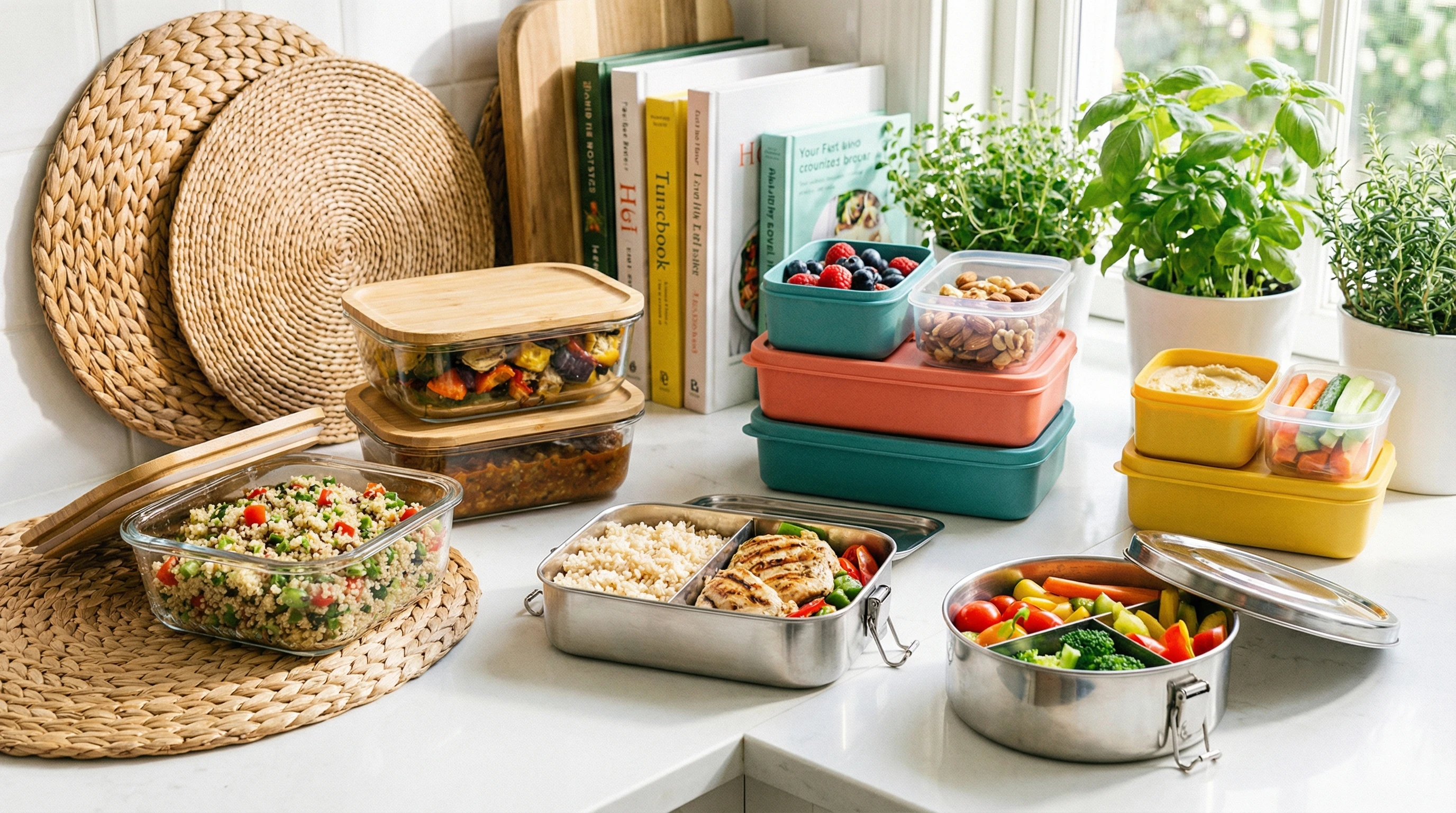
Healthy lunch containers come in plenty of styles, each with its own strengths and drawbacks. I break them into the three main types most meal preppers look at:
- Plastic containers: Lightweight and often inexpensive, handy for big batch meal prepping, but you’ll want BPA/BPS-free options. Some can stain or warp if you microwave them too much.
- Glass containers: These are my top pick for most uses. You can use them in the microwave or oven, they don’t stain or hold onto smells, and they work for both hot and cold meals. They’re a bit heavier and can break if dropped, so a padded lunch bag can help.
- Stainless steel containers: Great for durability and being lightweight. Airtight versions are out there, and they often handle rough use better than glass or basic plastic. Most don’t go in the microwave, so these are best if you’re okay eating meals cold or at room temperature.
It’s worth checking the fine print to know if they’re microwave, freezer, or dishwasher safe. All those factors matter, especially if you’re prepping for a few days at a time.
How to Choose the Best Lunch Container for Meal Prep
There’s never one container that works for everyone, so it’s smart to think about what fits your life. Here’s what I suggest focusing on before clicking “buy” or picking up a set off the shelf:
- Leakproof lids: Soups, dressings, stews, or anything not totally solid is risky if the seal isn’t strong. Gasket-lined lids and locking snaps are game changers.
- Compartments: Separate areas for grains, proteins, and veggies keep food from getting mushy or mixing flavors. Bento-style containers are worth checking if you like having variety.
- Material safety: Always check for BPA/BPS-free plastic or brands that offer food grade materials. Some glass containers use reinforced glass for better handling of temperature changes.
- Size and shape: Round or square, tall or flat—consider your fridge space and bag. Stackable sets save lots of room if you meal prep for a group.
- Easy cleaning: Containers with rounded corners or removable gaskets make cleaning quicker. Dishwasher safe picks are a huge plus.
I like having a few sizes on hand—a small one for snacks or dressings, everyday compartments for regular lunches, and a big one for salad bowls or grain bowls.
Recommended Healthy Lunch Containers for Meal Prep
After lots of testing (and some messy spills), I settled on some reliable picks that have worked great for me and got strong reviews online:
- Glass-lock Oven Safe Lunch Boxes: Super tough, leakproof, and easy to wash. The glass stays clear after months of use.
- Prep Naturals Glass Meal Prep Containers: Choose single or double compartment styles. I like how solid the locking lids feel, and they take freezing and microwaving like a champ.
- Bent-go Fresh Lunch Box: A favorite bento-style plastic container—firm dividers, fun colors, and the lid snaps tight. Good for both kids and adults.
- Lunch Bots Stainless Steel Containers: Sleek and lightweight, with tight lids. No plastic touches your food, which a lot of folks love, but these are not the pick for really soupy dishes.
Each brand has its own range of sizes and shapes, so odds are good you’ll stumble upon something that fits your usual meal. For an all-in-one look at more options and reviews, Wirecutter regularly updates their best lunch containers list.
Troubleshooting: Common Healthy Lunch Container Issues
No lunch container solves every problem. Here are a few issues I’ve seen, plus fixes that actually work:
- Leaking: When you get a new set, test with water and make sure lid gaskets are set correctly. If any cracks show or lids get warped, it’s time for a replacement.
- Staining: Red sauces and curries can do a number on plastic. Rinse with cold water before adding food to help, but glass or steel will resist stains almost every time.
- Lingering smells: Soak with hot water and baking soda (or toss in a lemon wedge) and rinse well. Stainless is usually easiest to keep fresh.
- Lid warping: Stick with warm, not hot, dishwasher cycles for plastic, and let food cool down before sealing containers for storage.
Taking a little extra time for cleaning and storage makes any set last much longer.
Material Breakdown: Pros and Cons
Jumping into the details about container types makes picking the right one easier:
- Plastic: Usually the most affordable, sometimes lightweight and stackable, but can hold onto smells and stain (especially when microwaving tomato or curry dishes).
- Glass: Perfect for reheating, does not stain or keep odors, but breaks if dropped and is heavier to tote every day.
- Stainless steel: Super tough and odor-free, but most can’t go in the microwave, and some aren’t leakproof without silicone seals.
Meal Prep Tips with Lunch Containers
Certain habits can seriously give your meal prep a boost. Here are some that I stick to:
Batch cook and portion: Make grains or protein in large batches and split them up right away. It keeps portions right and saves time, so all you do is grab your container and move on.
Mix up textures and flavors: Bento-style boxes let you pack crunchy veg, dips, and main courses side by side. That way, you open your lunch to something fresh and not soggy.
Label and date every meal: A piece of masking tape with the date helps you pick the freshest meal first. If you prep several lunches at once, this saves you from any forgotten leftovers.
Microwave-smart packing: Glass or vented lids are best for reheating. Keep dressings or any wet component in little side containers until you eat—no more wilted salads.
It helps your routine if you get used to running everything through the dishwasher as soon as you’re home, so you never run out of clean containers when it’s time to prep again.
Practical Uses for Healthy Lunch Containers
- Work lunches: Pack snacks, mains, and sides using compartments for better organization and to save you time at lunch.
- School lunches: Bento-style boxes make portioning for kids (or picky adults) super easy. Plenty come with built-in ice packs in the lid.
- Travel and day trips: Rugged stainless steel or leakproof glass work well in backpacks. Bring wet wipes for easy cleaning when you’re on the go.
Healthy lunch containers are also perfect for prepping overnight oats, smoothie bowls, and layered salads. If you’re aiming to save cash and skip takeout, investing in these pays off fast.
Frequently Asked Questions
Q: How many containers do I need for meal prep?
Most people find that having five to seven containers is enough for a full week of lunches, plus one or two extras for snacks or batch cooking. A couple of spares really helps when life gets busy.
Q: Are glass containers safe for kids to use?
Some brands use reinforced borosilicate glass that isn’t likely to shatter, but lighter plastic or stainless steel with locking lids can be better choices for kids or packed family lunch bags.
Q: Best way to reheat food in containers?
Glass is perfect for microwaving or oven use (just always take off the lid). For plastic, check that it says microwave safe and lift the lid a little to let steam escape. Stainless steel isn’t made for the microwave, but it’s fine for cold dishes.
Q: How do I stop food from getting soggy?
Put wet ingredients like sauces in a small, separate leakproof container. Want to cut down extra moisture with fruit? Try placing a paper towel at the bottom before packing.
Wrapping Up: Making Healthy Lunch Prep Simple
Healthy lunch containers make meal prepping easy, routine, and even pretty fun. Find types and brands that fit what you actually do day to day, and you’ll stick with it a lot longer. With the right setup, your home-packed lunches stay fresh, you waste less, and lunchtime becomes something to look forward to again.
Try out a few options, maybe even test them for a week or two, and you’ll spot what matches your needs best. Once you settle into your favorite containers, prepped lunches go from an annoying chore to something you enjoy and look forward to each day.